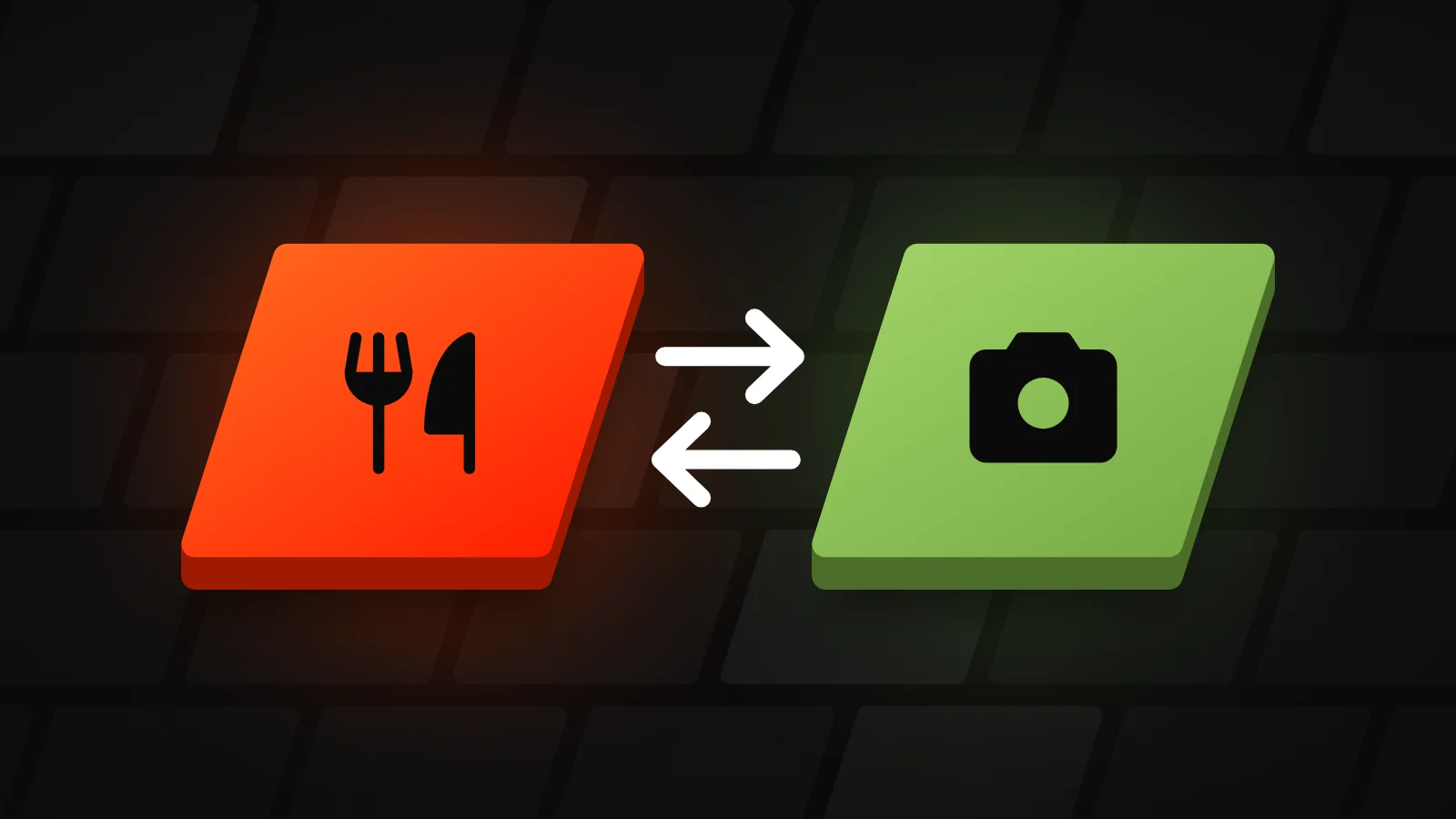
A barter collaboration is a deal where a brand gives a creator a free product, meal, stay or service, and the creator makes content in return. No fee is paid. A café invites you for lunch for two, for example, and you post one reel and two stories.
It sounds simple, but most barter deals that go wrong do so for the same reason: nobody agreed the details first. This guide covers how barter works in India, what to settle before you say yes, and the disclosure and tax rules that apply even when no money changes hands.
Barter collaboration examples
Barter works best when the thing being offered is also the thing worth filming. These are typical swaps, not fixed rates.
| Business | The brand gives | The creator makes |
|---|---|---|
| Café or restaurant | A meal for two | 1 reel and 2 stories |
| Salon or spa | One treatment | 1 before-and-after reel |
| Hotel or resort | A one-night stay | 1 reel, 3 stories and photos the hotel can reuse |
| Fitness studio | A set of classes | 2 stories during the classes and 1 reel at the end |
| Fashion or beauty brand | A product to keep | 1 post or reel showing it in use |
Barter or paid: what is the difference?
| Barter | Paid | |
|---|---|---|
| What the creator gets | A product, meal, stay or service | A fee, sometimes with a product as well |
| What the brand can expect | Usually a small, clear set of posts | More control: drafts, dates, scripts, usage rights |
| Works well for | Local businesses, first collabs, new launches | Larger campaigns, ads, long-term ambassadors |
| Disclosure label | Needed | Needed |
If a creator receives any money, treat it as a paid collaboration, even if a free product is part of the deal.
How a barter collab works, step by step
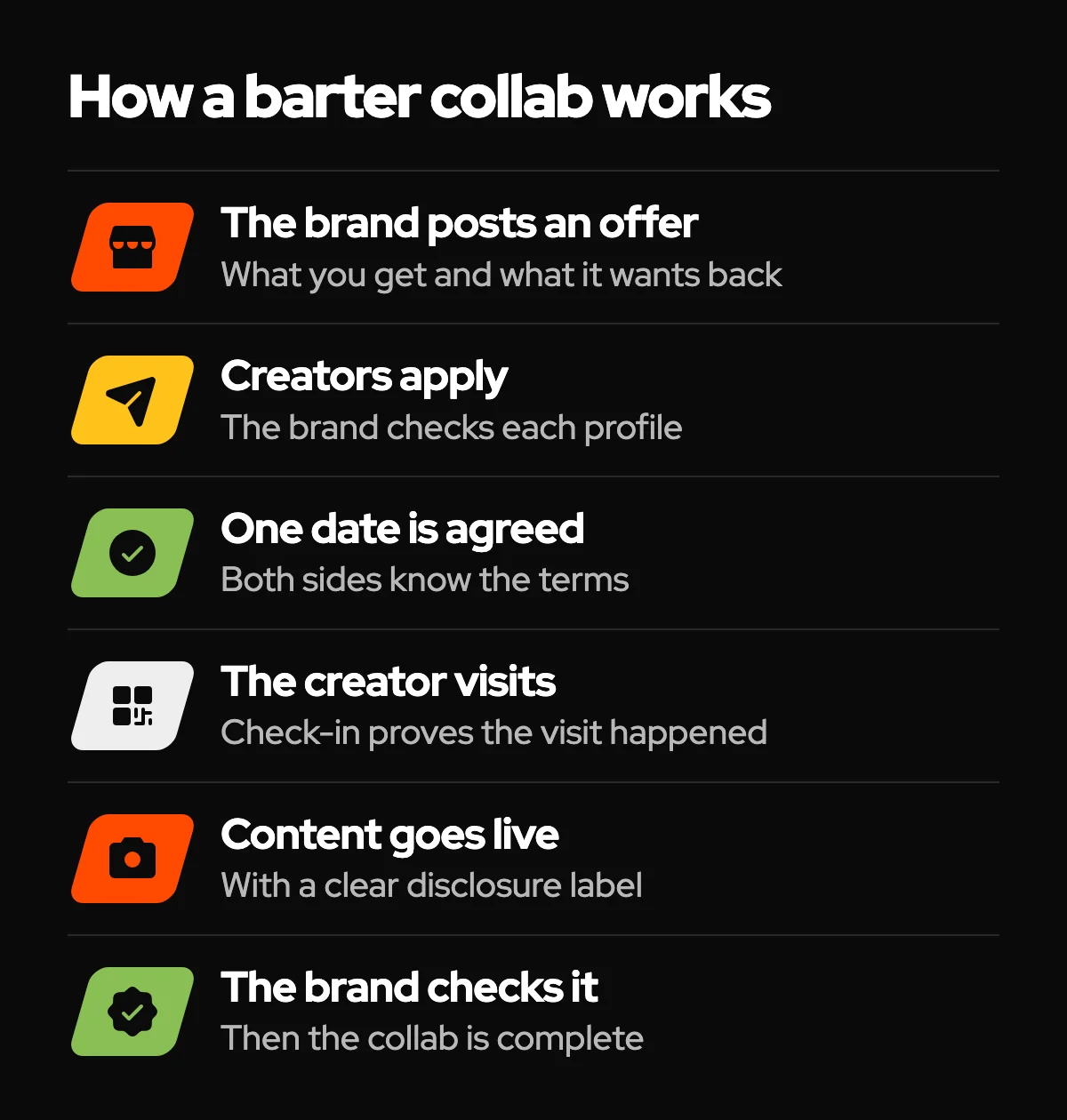
- The brand posts an offer. It says what the creator receives and what content it wants in return.
- Creators apply. The brand looks at each creator’s profile and recent content.
- Both sides agree a date. Everyone knows the time, the number of guests and the deadline.
- The creator visits. A check-in on arrival avoids arguments later about whether the visit happened.
- The content goes live with the right tags and a clear disclosure label.
- The brand checks it. If something in the brief is missing, it asks for a change. If not, the collab is complete.
Is a barter collab worth it?
For a creator, compare what you get with the time it takes. Count everything: travel, the visit, editing, captions and changes. Suppose a meal for two is worth ₹1,500 to you and the whole job takes five hours. That is ₹300 an hour, before travel. For a place you would happily pay to visit, or a first collab that gives you work to show, that may be a good trade. If you would never have gone there, it probably is not.
A barter deal is usually worth taking when at least two of these are true:
- You would have spent your own money on it.
- It suits what your followers already come to you for.
- It gives you content you can show other brands.
- The brand is one you would like to work with again.
Say no, or ask for a fee, when the brand wants many posts, wants to run your video as an ad, or asks you not to work with competitors.
What to agree before you say yes
Get these in writing. A chat message is fine.
- What you receive: the item or menu, its value, and whether a guest is included.
- What you make: how many reels, stories or posts, and any must-show details.
- When: the visit date and the date the content should be live.
- Tags: accounts, location and hashtags.
- Changes: how many rounds of edits are included. One is reasonable for barter.
- Reuse: whether the brand can repost your content, use it in ads, and for how long.
- Cancellation: how much notice each side gives.
Here is a message you can copy:
Hi, thanks for inviting me. To confirm: lunch for two on Saturday at 1 pm, up to ₹1,500. I will post 1 reel and 2 stories within 7 days, tag your account and location, and add #Ad. One round of changes is included. You may repost to your page; please ask me first before using it in ads. Does that work for you?
Do you have to label a barter post?
Yes. The Advertising Standards Council of India (ASCI) treats free products, meals, trips, hotel stays, gifts and barters as a “material connection”. If there is one, the post needs a disclosure label, even when the product arrived without you asking for it.
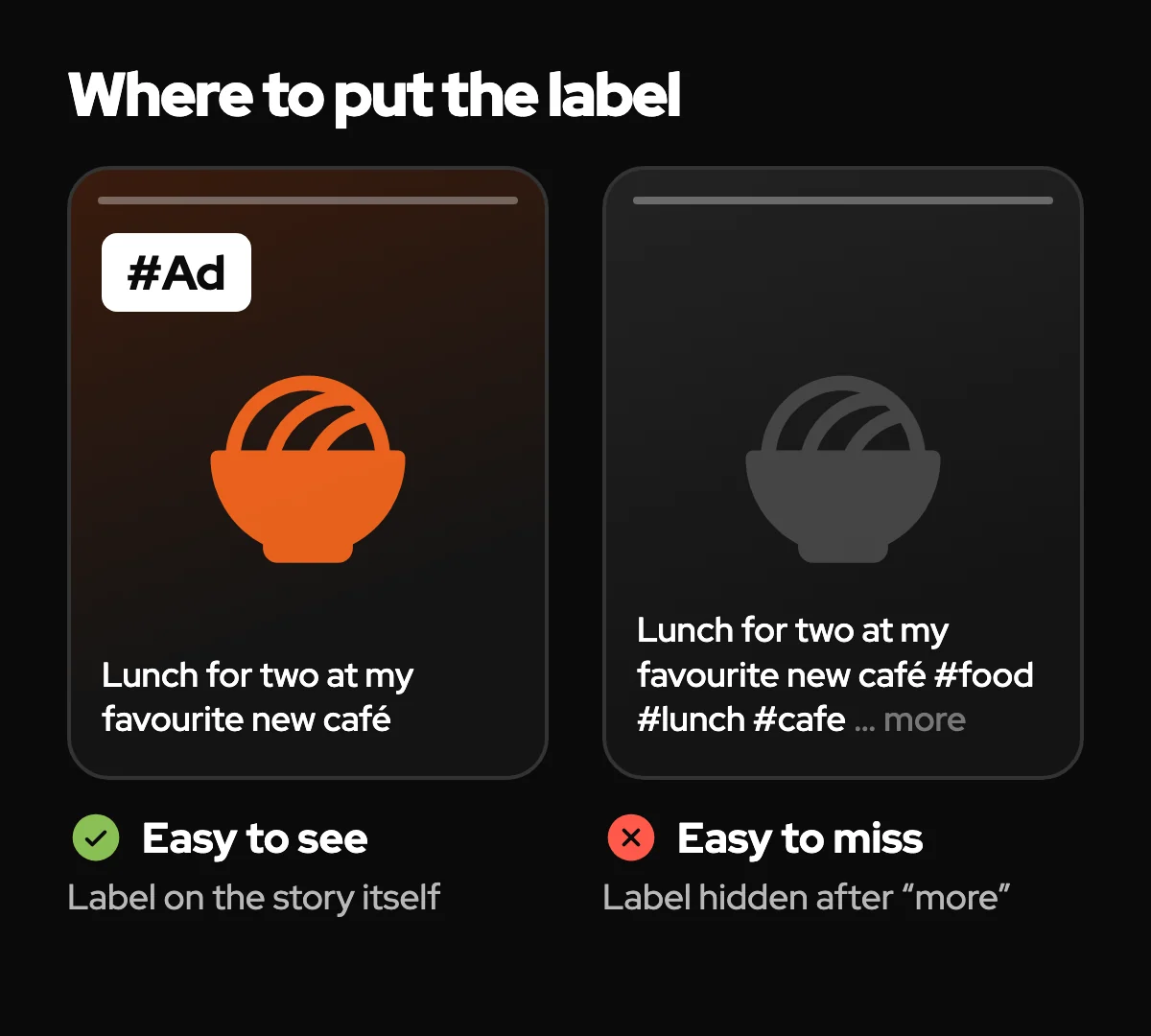
ASCI’s FAQ lists these labels and says no others can be used: #Advertisement, #Ad, #Sponsored, #Collaboration, #Partnership, #Employee and #Free gift. Shortened or invented tags such as #collab or #gifted are not on that list.
| Type of content | Where the label goes |
|---|---|
| Photo or video with a caption | In the caption, up front, so nobody has to scroll to find it |
| Story or picture without text | On the picture itself |
| Video up to 15 seconds | On screen for at least 3 seconds |
| Video from 15 seconds to 2 minutes | On screen for at least one third of the video |
| Video of 2 minutes or more | On screen throughout the part that features the brand |
| Live | At the start and the end |
The video timings apply when there is no caption to carry the label. ASCI can send a notice to both the brand and the creator, so this is a shared job. ASCI also has a short list of do’s and don’ts that is worth saving.
Is barter taxed?
It can be. When a business gives someone benefits worth more than ₹20,000 in total in a financial year, it may have to deduct 10% tax (TDS), even if the benefit is a product and not cash. Until March 2026 this was section 194R. From 1 April 2026 the rule sits in section 393(1) of the Income-tax Act, 2025.
A café lunch will rarely reach that limit on its own, but a phone, a holiday or many small gifts from the same brand can. Keep a simple list of what you received, from whom, when, and what it was worth. This is general information, not tax advice, so check your own case with a chartered accountant.
How to get your first barter collab
- Pick one subject and one city. “Cafés in Pune” is easier for a brand to say yes to than “lifestyle”.
- Post three pieces of practice content about places you paid for yourself. These become your samples.
- Make your profile easy to read. Say your city, your subject and how to contact you.
- Know your numbers. Have your average reel views, your top cities and your audience age ready. A small local audience can be worth more to a local business than a large one far away.
- Start nearby. Apply to businesses your followers could actually visit this week.
- Deliver on time. Finished work, on the agreed day, is what gets you invited back.
On Scollab, you can find offers and events from brands near you. Sign up in the app and add your Instagram. Once our team approves your profile, you can apply, check in at the venue with your QR code, and submit your content for review, all in one place.
If you run a restaurant or café and want to try barter from the other side, read our guide to influencer marketing for restaurants and cafés.
Mistakes to avoid
- Accepting first and asking about deliverables later.
- Bringing extra guests without checking.
- Hiding the label among other hashtags.
- Letting the brand use your video in ads for free because reuse was never discussed.
- Saying yes to everything, until your page is mostly barter posts.
Common questions
Does barter collaboration mean I work for free?
No. You are paid with a product, meal, stay or service instead of money. Whether it is a fair trade depends on what it is worth to you and how long the work takes.
How many followers do I need for a barter collaboration?
There is no fixed number. Local businesses often care more about where your followers live and how good your content looks. Each brand sets its own bar.
Can I give an honest opinion in a barter post?
Yes. A free meal does not buy a good opinion. If something went wrong, tell the brand first and agree what to do. The label is still needed, whatever you say.
Is “#gifted” or “#collab” enough?
Not under ASCI’s list. Use one of its labels, such as #Ad, #Collaboration or #Free gift.
What if the creator never posts?
This is why the deadline should be agreed in writing. Send one polite reminder with the agreed date. Brands that use check-in and a set deadline for each visit have a clear record if it comes to that.