Influencer marketing for a restaurant means inviting creators to visit, eat and post about it, usually in return for a meal, a fee or both. For most independent restaurants and cafés, the best place to start is small: six to ten local creators, on your quiet days, with one clear goal.
You do not need a celebrity or an agency to begin. You need an offer worth filming, the right local creators, a short brief, and a way to tell whether it worked. Here is how to do each one.
1. Pick one goal
“More awareness” is hard to act on. Choose one of these and let it decide everything else.
| Goal | What to run | What to watch |
|---|---|---|
| Fill quiet hours | Weekday lunch visits | Covers on those days |
| Launch a new menu | A tasting event on one date | Orders of the new dishes |
| Open a new outlet | An opening event plus visits for two weeks | Profile visits, direction requests and walk-ins |
| Get photos and videos | A UGC visit, where creators shoot for you to reuse | Number of usable clips |
2. Decide what to offer
Most small restaurants begin with barter: a meal in exchange for content. If that is new to you, start with our guide to how barter collaboration works in India.
Cost it on what the food costs you, not the menu price. For example, if a meal for two sells at ₹1,500 and your food cost is 35%, each visit costs about ₹525 in ingredients. Ten visits come to roughly ₹5,250, plus staff time. Those are example figures, so put in your own.
Make the offer specific:
- Say what is included and the upper limit.
- Say whether a guest can come. Most people eat out in pairs, and it makes better content.
- Choose days and times when a full table would not cost you a sale.
- Keep the ask in proportion. One reel and two stories is fair for a meal. Ten posts is not.
Expect to pay a fee for larger creators, for ads that use their video, or for a long list of posts.
3. Choose local creators
For a restaurant, the most useful follower is one who can visit this week. A creator with 5,000 followers in your city can bring more guests than one with 100,000 spread across the country.
Open the profile and check five things:
- City. Ask for a screenshot of their top audience cities.
- Recent posts. Look for regular food content in the last month.
- Comments. Real questions such as “where is this?” are a good sign. Rows of the same emoji are not.
- Views on ordinary reels. Judge the average, not the one that went viral.
- Style. Would that video look right next to your own posts?
Be careful with sudden jumps in followers, very few comments for the number of likes, or a page made up entirely of promotions.
4. Write a one-page brief
A good brief is short. Tell creators what must be in the video and leave the rest to them. They know what their audience watches.
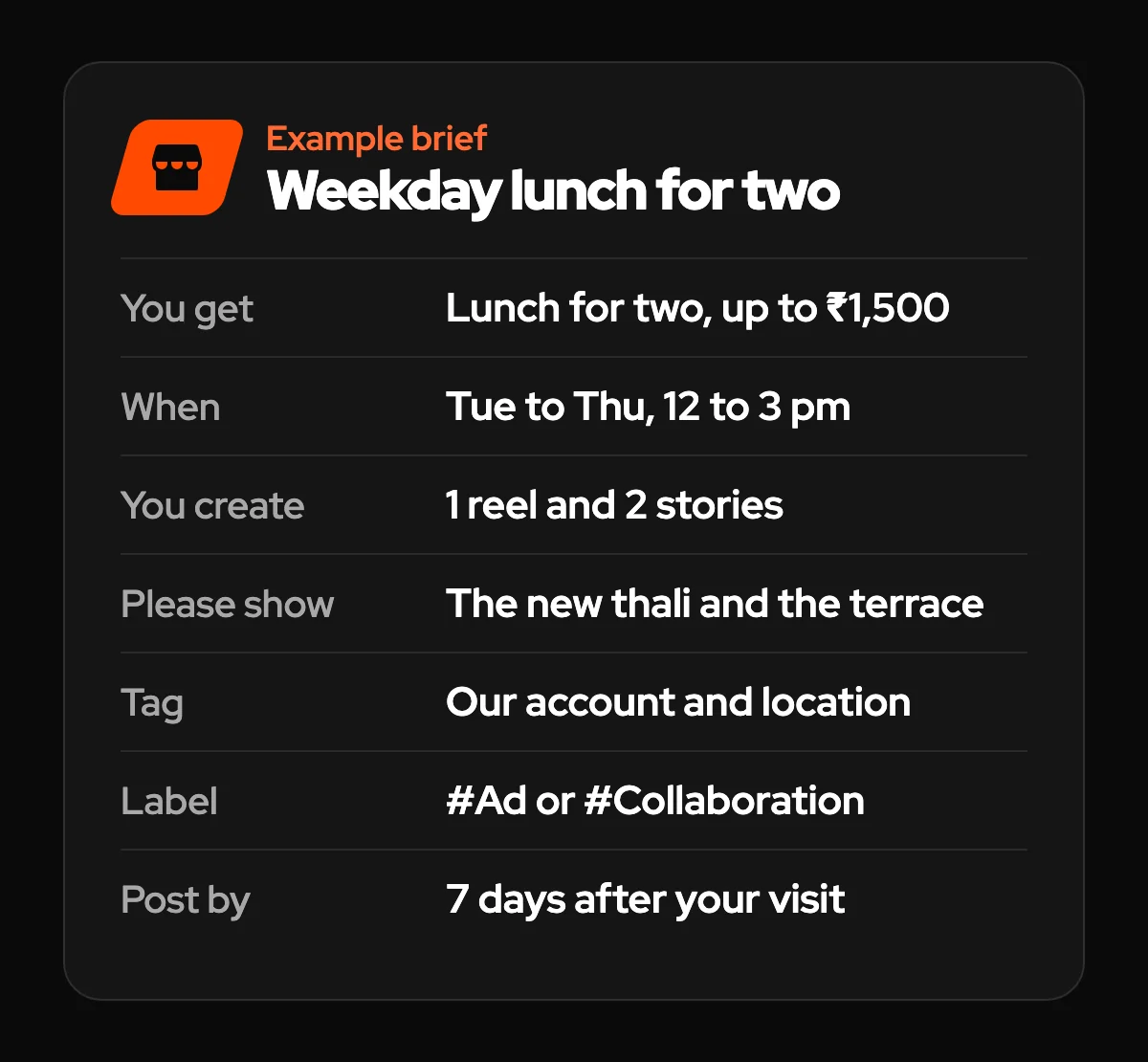
You can copy this text version:
Lunch for two, up to ₹1,500, Tuesday to Thursday from 12 to 3 pm. Please create 1 reel and 2 stories. Show the new thali and the terrace. Tag our account and location, and label the post #Ad or #Collaboration. Please post within 7 days of your visit. If something is not right on the day, tell us first so we can fix it.
5. Plan the visit
- Use time slots. Two creators at once is usually plenty for a small café.
- Tell the team. The host should know the name, the offer and the limit before the creator arrives.
- Keep a good table free. Daylight near a window helps more than any equipment.
- Check them in. Note who came and when, so you know whose content to expect.
- Serve the signature dish first, while it is fresh and the light is good.
- Do not hover. Say hello, share one story about the dish, and let them eat.
6. Check the content and the label
Within a day of posting, check that the tags, location and dishes are right. Ask for a fix if a fact is wrong, such as the price or the address. Do not ask a creator to change an honest opinion.
A free meal has to be disclosed. ASCI, India’s advertising self-regulator, counts meals and barter as a material connection, and can send a notice to both the brand and the creator when a label is missing. Its accepted labels include #Ad, #Sponsored, #Collaboration and #Free gift. Put the label in your brief so nobody has to chase it later.
Keep creator posts and customer reviews separate. Google’s review policy does not allow reviews given in exchange for free food or discounts.
7. Measure what happened
Likes are easy to count and tell you little about tables. Track a few numbers you can act on.
| What to track | Where to find it |
|---|---|
| Guests who came because of a creator | Ask “how did you hear about us?” at billing, or give each creator a code |
| Covers on the promoted days | Your billing system, against the four weeks before |
| Orders of the promoted dish | Your billing system |
| Profile visits and direction taps | Instagram Insights and your Google Business Profile |
| Saves and shares | Ask the creator for a screenshot after 7 days |
Then work out the cost for each new guest:
total food and staff cost ÷ guests who mentioned a creator or used a code
If ten visits cost ₹8,000 and 40 new guests mention a creator, that is ₹200 a guest. Compare it with what you pay to win a guest through ads or a delivery app. Remember that some people will visit weeks later, and some will never mention where they saw you.
A 30-day plan
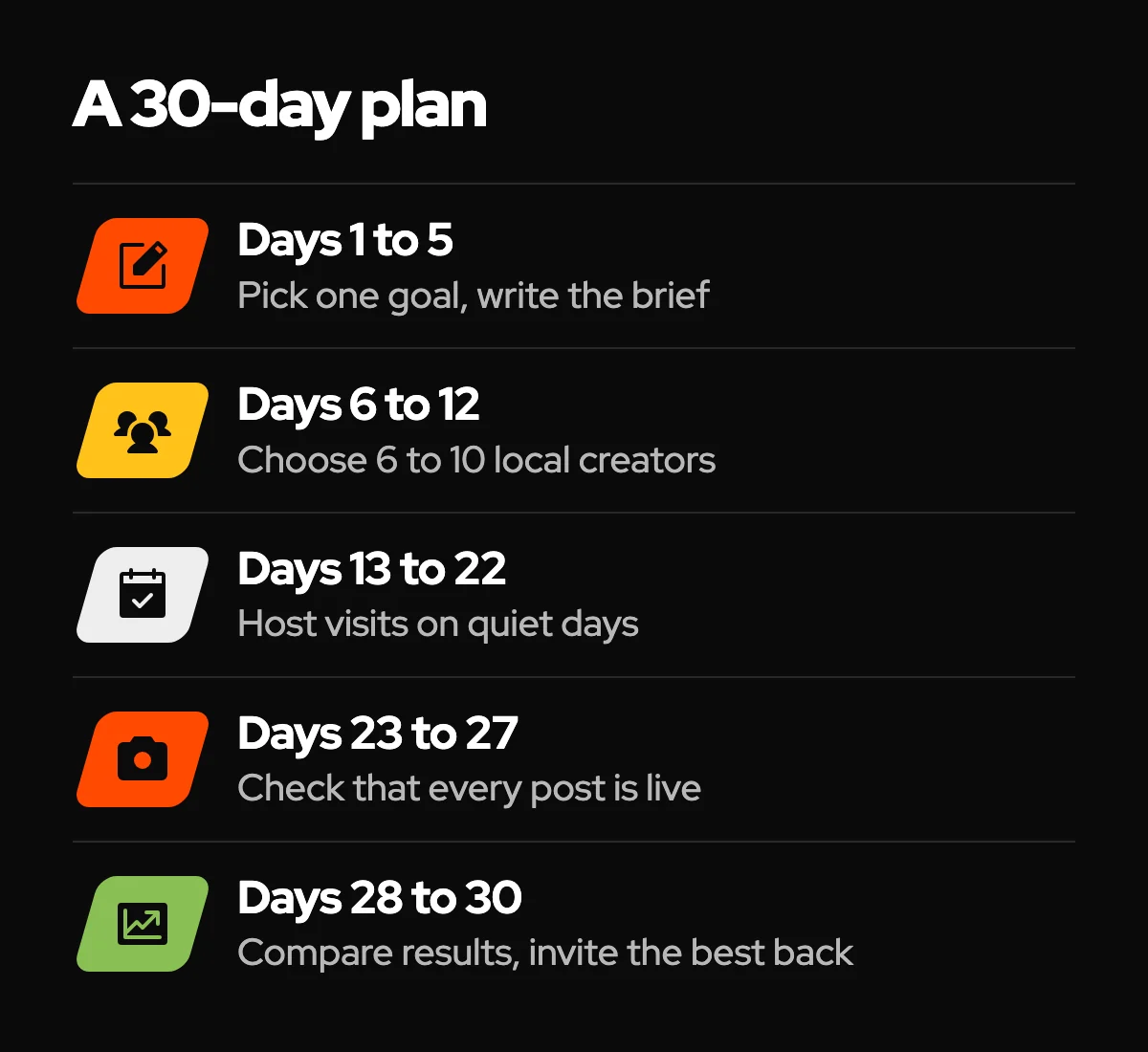
- Days 1 to 5: pick the goal, write the brief, and note your usual numbers so you have something to compare.
- Days 6 to 12: post the offer and choose six to ten creators.
- Days 13 to 22: host the visits, two or three a day at most.
- Days 23 to 27: check that every post is live, labelled and tagged.
- Days 28 to 30: compare the numbers and invite the best two or three creators back.
Inviting good creators back usually beats finding new ones. A second visit looks like a habit, not an advert.
Mistakes to avoid
- Choosing by follower count alone.
- Running visits on a Saturday night, when the team is stretched and the light is poor.
- Writing a script. It shows.
- Not writing down the deadline.
- Stopping after one post. A handful of creators in the same month is easier to notice.
How Scollab helps
You can do all of this with messages and a spreadsheet. Scollab puts it in one app:
- Post an offer with the dates and time slots that suit you, or an event with a guest limit.
- Review applications: open each creator’s profile and Instagram, then accept, shortlist or reject.
- Check creators in by scanning their QR code at the door.
- Review every reel, story and post, then approve it or ask for changes.
- Chat with creators inside the app.
Apply as a brand, or book a demo to see it first.
Common questions
How much does influencer marketing cost for a restaurant in India?
It depends on the creator and the ask. With barter, your main cost is food and staff time. Larger creators usually charge a fee on top, so ask for a quote that lists every post and whether you may reuse the video.
How many creators should a small café invite?
Six to ten over two weeks is a good first test. It is enough to compare results and small enough for the team to handle well.
Are small creators better for restaurants?
Often, if their followers live nearby. Check their audience cities before anything else.
Can I use a creator’s video in my ads?
Only if they agree. Write down where you will use it and for how long before the visit. Creators often charge for ad use.
What if a creator does not like the food?
Ask them in the brief to tell you first, then fix it if you can. Never ask for a false opinion. One honest, balanced post does more for trust than ten that all sound the same.